

Spring in the BC Interior moves fast. One week your lawn is barely waking up, and a few weeks later the temperatures are already climbing toward summer. Getting your spring lawn fertilizer down at the right time — with the right product — is one of the most impactful things you can do for your lawn all year.
This guide covers exactly what to apply, when to apply it, and what those numbers on the bag actually mean — all based on conditions in Kamloops, Merritt, and the surrounding Interior.
When to Apply Spring Fertilizer in BC
The most common mistake with spring fertilization is applying too early. It feels productive to get out there in late March or early April, but if your soil hasn't warmed up yet, your grass can't absorb nutrients efficiently — and you've largely wasted the application.
Wait until your soil temperature reaches 10°C consistently. In the Kamloops area, this typically happens between late April and early May. At higher elevations around Merritt, you're usually looking at a week or two later.
A few practical cues to watch for:
- You've mowed your lawn at least once or twice
- Grass is actively growing and greening up on its own
- Overnight temperatures are staying above 5°C regularly
If you're hitting all three, you're in the window. Don't rush it — applying spring fertilizer to cold, dormant soil is one of the easiest ways to waste product and money.
Spring Fertilizer Numbers: What They Mean and What to Look For
The three numbers on any fertilizer bag — like 25-5-15 or 30-3-3 — represent the percentage of nitrogen (N), phosphorus (P), and potassium (K) in that order. Understanding what each one does in spring helps you pick the right product rather than just grabbing whatever's on the shelf.
Nitrogen (N) — the first number This is what drives green growth in spring. After a BC Interior winter, your lawn is hungry for nitrogen to kick off leaf production and give you that deep green colour. You want the first number to be relatively high in spring — somewhere in the range of 20–30.
Phosphorus (P) — the middle number Phosphorus supports root development. In spring, moderate phosphorus helps your lawn recover from winter and establish strong roots going into summer. A lower middle number (3–10) is typical for lawn fertilizers and is usually sufficient unless you're seeding or repairing bare spots.
Potassium (K) — the third number Potassium builds overall stress tolerance — drought resistance, disease resistance, and the ability to handle BC's summer heat. A spring fertilizer with a decent potassium number (10–15) will help your lawn hold up through the hot months ahead.
What NPK Numbers Work Best for BC Lawns in Spring?
For most cool-season lawns in the Interior — Kentucky bluegrass, perennial ryegrass, or a blend — a fertilizer in the range of 25-5-15 is a solid all-around spring choice. It delivers strong nitrogen for green growth while keeping potassium high enough to build resilience for summer.
If you're overseeding bare spots at the same time, look for a starter fertilizer with a higher middle number (phosphorus) to support germination — something closer to 10-20-10.
Best Spring Lawn Fertilizer Options for BC
Not all spring fertilizers are the same format, and the right one for your lawn depends on your setup and goals.
Granular Fertilizer
The most common choice for BC homeowners. Granular fertilizer is easy to apply with a spreader, lower-risk for burning, and gives your lawn a steady feed over several weeks. It's the best all-around option for spring lawn fertilization.
Slow-Release Granular
A step up from standard granular — slow-release formulas break down gradually over 6–12 weeks, which means more even feeding and less risk of burning if you're applying during a warm spell. A good choice if you want to set it and forget it for the early part of the season.
Quick-Release Granular
Fast-acting and useful for kick-starting a lawn that's looking particularly tired after winter. Just be sure to water immediately after applying, and avoid using it during hot or dry conditions.
Liquid Fertilizer
Liquid fertilizer absorbs quickly and is a good option for smaller lawns or targeted problem areas. It works faster than granular but needs more frequent application. More effort, but useful if you want to see quick results.
Can You Use Fall Fertilizer in the Spring?
This comes up a lot, and it's a fair question. The short answer: it's not ideal.
Fall fertilizers are formulated with higher potassium and lower nitrogen to prepare grass for winter dormancy — the opposite of what your lawn needs in spring. Using a fall blend in spring means your grass misses out on the nitrogen boost it needs to grow well, and you'll likely see slower green-up and thinner growth through May and June.
If it's all you have on hand and you want to apply something, it won't kill your lawn — but pick up the right spring product when you can. The difference in results is noticeable.
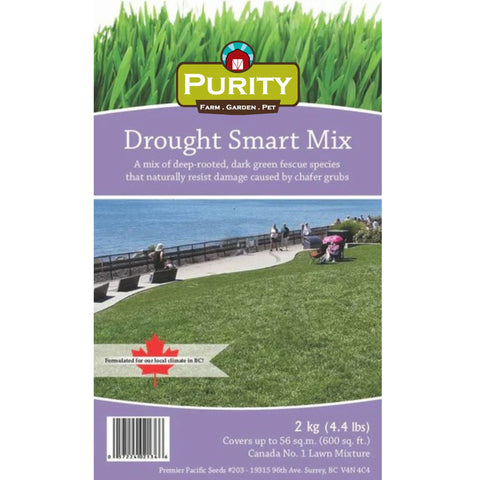
Overseeding This Spring?
Pair your fertilizer with the right seed blend. We carry lawn seed suited to BC's Interior climate — great for filling in thin or bare patches.
Browse Lawn SeedHow to Apply Spring Lawn Fertilizer
Once you've got the right product and your timing is right, application is straightforward.
1. Mow first. Cut your lawn a day or two before fertilizing so granules can reach the soil surface rather than sitting on top of long grass blades.
2. Check the weather. Avoid applying right before heavy rain — it will wash fertilizer away before your soil can absorb it. A dry stretch with light rain in the forecast 24–48 hours later is ideal.
3. Calibrate your spreader. Use the bag's recommended spreader setting and test it on a small section first. Walk at a consistent pace — uneven speed is one of the most common causes of streaky results.
4. Apply in a pattern. Walk the perimeter first, then fill in the middle with parallel passes overlapping by 6–12 inches. Turn off the spreader when you stop or turn.
5. Water within 24–48 hours. Half an inch of water activates the granules and moves nutrients into the soil. In BC's dry Interior, don't count on rainfall — be ready to water it in yourself.
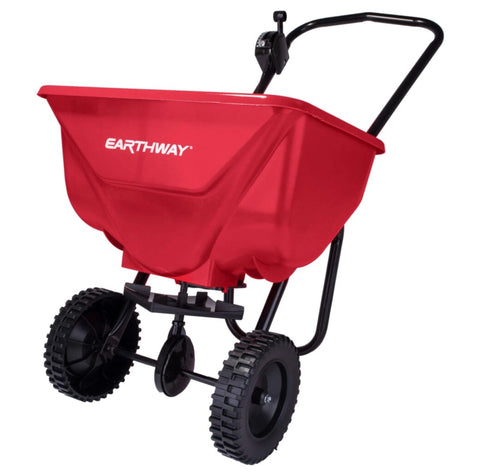
Need a Spreader?
Get even coverage every time. We carry broadcast and drop spreaders to suit any lawn size — in store in Kamloops and Merritt.
Browse SpreadersFrequently Asked Questions
When should I put spring fertilizer on my lawn in BC? Late April to early May for most of the Kamloops area. Wait until you've mowed once or twice and soil temperatures are consistently at 10°C. At higher elevations near Merritt, aim for early to mid-May.
What are the best spring fertilizer numbers for a BC lawn? Look for a fertilizer with a high first number (nitrogen) in the range of 20–30, a moderate middle number (phosphorus) around 3–10, and a solid third number (potassium) around 10–15. A 25-5-15 blend is a reliable starting point for most cool-season lawns in the Interior.
How often should I fertilize in spring? Once is enough for most lawns. One well-timed spring application of a quality granular fertilizer will carry your lawn through to a light summer feed in mid-June if needed.
Can I fertilize and overseed at the same time in spring? Yes, but use a starter fertilizer (higher phosphorus) rather than a standard nitrogen-heavy spring blend. Seed your lawn first, apply the starter fertilizer, and water it all in together.
What if I miss the spring fertilizer window? Don't fertilize once your lawn is under summer heat stress (daytime temps consistently above 28–30°C). If you miss the late April/early May window, wait for a cooler stretch in June and use a slow-release product with lower nitrogen to avoid burning stressed grass.
Do I need to aerate before applying spring fertilizer? Aeration is most effective in fall, but if your soil is heavily compacted, a spring aeration before fertilizing will help nutrients reach the root zone more effectively. It's not essential every spring, but worth doing if your lawn has been struggling.
Ready for Spring?
The right spring fertilizer applied at the right time makes the rest of the season easier — better colour, stronger roots, and a lawn that holds up through BC's dry summer months.
If you're not sure which product is right for your lawn, stop by and ask. We carry fertilizers suited to Interior conditions and our team is happy to point you in the right direction — in store in Kamloops and Merritt, or shop online for delivery across BC.

Shop Spring Lawn Fertilizer
In store in Kamloops and Merritt, or order online for delivery across BC. Our team is happy to help you find the right product for your lawn.
Shop Now