
If you have horses in BC's Interior, Hoary Alyssum is one plant you need to know. It's common, it blends in easily with other vegetation, and it can cause serious health problems in horses — including death in severe cases.
The good news: if you know what to look for and act early, you can manage it. This guide covers everything horse owners and landowners in the Kamloops and Merritt area need to know.
What Is Hoary Alyssum?
Hoary Alyssum (Berteroa incana) is an invasive annual or short-lived perennial that has spread widely across BC's Interior. It's common in hayfields, roadsides, disturbed areas, and pastures — exactly the places your horses spend time.
It's not a dramatic-looking plant. Small white flowers, rough grey-green leaves, and a fairly unremarkable appearance make it easy to overlook. That's part of what makes it dangerous — it often goes unnoticed until it's already well established.
Why It's a Problem for Horses
Hoary Alyssum is toxic to horses. It contains compounds that cause a condition sometimes called "Hoary Alyssum toxicosis," with symptoms that can range from mild to life-threatening depending on how much the horse consumes.
Symptoms include:
- Fever
- Swelling of the lower legs (stocking up)
- Laminitis (founder)
- Lethargy and reduced appetite
- In severe or prolonged cases, death
The risk is especially high in hay. Horses can be selective grazers and may avoid the fresh plant in pasture — but once dried into hay, Hoary Alyssum is harder to detect and horses consume it without knowing.
The general threshold is 20% or more Hoary Alyssum content in hay — but horses vary in sensitivity, and repeated lower-level exposure can also cause problems over time.
If you're sourcing hay from fields in the BC Interior, it's worth knowing whether Hoary Alyssum is present in those fields before you purchase.
How to Identify Hoary Alyssum
Hoary Alyssum is easy to miss if you don't know what you're looking for. Here's what to watch for:
Flowers: Small, white, with four deeply notched petals — almost like each petal is split in two. Flowers grow in clusters at the end of stems and along the upper branches.
Leaves and stem: Both are covered in star-shaped hairs that give the plant a rough, greyish-green texture. Run your hand along the stem and it feels almost sandpapery.
Seed pods: Oval-shaped and flattened, held close to the stem. After flowering, the plant forms long rows of seed pods along the branches — this is often the easiest way to identify it once flowering is over.
Height: Typically 30cm to 1m tall, with multiple branching stems.
Where it grows: Roadsides, disturbed soils, hayfields, pastures, and rangelands. Prefers sunny locations with dry, nutrient-poor soil — common conditions across BC's Interior.
Look-alike to know: Shepherd's Purse (Capsella bursa-pastoris) has similar small white flowers but distinctive heart-shaped seed pods and a rosette of leaves at the base.

When Is It Most Dangerous?
Hoary Alyssum is most dangerous when it contaminates hay. Fresh plant in pasture poses a risk, but horses often selectively avoid it when other forage is available. Once dried into hay, it's much harder to detect — and horses consume it without being able to smell or taste the difference.
Peak risk periods:
- Haying season — when Hoary Alyssum-infested fields are cut and baled
- Late summer and fall — when pasture quality declines and horses are less selective about what they eat
- Winter feeding — when horses are fully reliant on stored hay and have no opportunity to selectively graze
If a horse in your care shows signs of fever, swollen legs, or laminitis without an obvious cause, and they've recently had access to new hay — Hoary Alyssum toxicosis should be on your list of possibilities. Contact your veterinarian immediately.
What to Do If You Find It on Your Property
Finding Hoary Alyssum on your property doesn't have to mean panic — but it does mean taking action before it seeds and spreads further.
Small infestations: Hand-pulling or digging is effective if you remove the entire root crown. This is most successful when the soil is moist. Once you've removed the plants, bag and dispose of them — don't compost, as seeds can survive.
Mowing is not recommended as a primary control method because Hoary Alyssum can flower and set seed very close to ground level after cutting.
Larger infestations: Chemical control is the most effective option for established populations. Herbicide applications are most effective when plants are young and actively growing in spring. Repeated treatments over multiple seasons are typically needed to fully clear a well-established infestation.
Equipment matters: For larger properties, having the right application equipment makes treatment significantly more effective. Proper sprayer calibration ensures even coverage and reduces the chance of under or over-application.
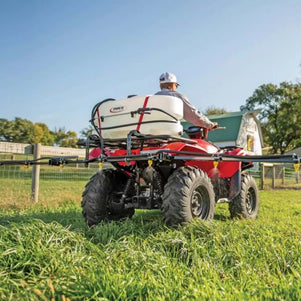
TNRD Equipment Rentals — Available at Purity Feed
📣 Did you know? TNRD Electoral Area residents may have access to free equipment rentals to help manage invasive plants on their property. Visit the link to find out if you qualify.
Book Your RentalTNRD Equipment Rentals — Available at Purity Feed
If you're managing Hoary Alyssum or other invasive plants on your property, having the right equipment is half the battle.
Purity Feed is your local TNRD equipment rental provider in Kamloops. Through the program, eligible landowners can access sprayers and other treatment equipment to tackle invasive plants on their property.
📣 Did you know? TNRD Electoral Area residents may have access to free equipment rentals to help manage invasive plants on their property.
Stop by in store or visit the link below to find out if you qualify and to browse available equipment.
Preventing Hoary Alyssum on Your Property
Know what's in your hay. Before purchasing hay, ask the producer whether Hoary Alyssum is present in their fields. If possible, inspect bales before feeding — particularly if you're sourcing from a new supplier.
Keep pastures healthy. Dense, healthy pasture is one of the best defences against invasive plant establishment. Thin or overgrazed areas create exactly the conditions Hoary Alyssum thrives in. Regular fertilization, overseeding of bare patches, and managed grazing rotation all help.
Inspect regularly. Walk your fields and pastures at least once during the growing season with an eye for unfamiliar plants. Early detection makes management significantly easier and less expensive.
Clean your equipment. Seeds spread on boots, vehicles, and equipment. If you've been working in an infested area, clean off before moving to clean ground.
Frequently Asked Questions
How much Hoary Alyssum is dangerous for horses? The general threshold cited in research is 20% or more Hoary Alyssum content in hay, but horses vary in sensitivity. Some animals react at lower levels, particularly with repeated exposure. There's no safe minimum — the goal should be eliminating it from your hay supply and pastures.
Can cattle eat Hoary Alyssum safely? Hoary Alyssum appears to primarily affect horses and ponies. Cattle, sheep, and other livestock do not appear to show the same toxicosis symptoms, though it should still be considered an undesirable weed in any pasture.
Will my horse recover if they've already eaten it? Mild cases typically resolve once the source of exposure is removed and supportive care is provided. Laminitis cases require veterinary attention and may have lasting effects depending on severity. If you suspect Hoary Alyssum toxicosis, contact your vet immediately.
Is Hoary Alyssum common in the Kamloops area? Yes. It's widespread across BC's Interior, particularly in hayfields, disturbed areas, and roadsides. The TNRD Invasive Plant Field Guide lists it as an established invasive species in the Thompson-Nicola region.
Can I get help identifying plants on my property? Yes — stop by Purity Feed in Kamloops or Merritt with a photo or a sample and our team is happy to help you identify what you're dealing with and talk through your options.
Know What's Growing on Your Property
Hoary Alyssum is one of more than 60 invasive plant species found in the Thompson-Nicola region. The earlier you catch it, the easier it is to manage.
If you're seeing unfamiliar plants in your pastures or hayfields this season — or if you want to get a handle on an existing invasive plant problem — stop by and talk to our team. We're here to help.
📣 TNRD Electoral Area residents may have access to free equipment rentals to manage invasive plants on their property.
Browse Equipment Rentals & Book Online →
Purity Feed | Serving BC's Interior since 1947 | Kamloops & Merritt

