

A healthy lawn doesn't happen by accident — it starts with feeding your grass at the right time, with the right product. Lawn fertilization in BC's Interior is a little different than what you'll read in generic guides. Kamloops and Merritt summers are hot and dry, springs can be short, and the soil here often leans alkaline. Timing matters more than most people think.
This guide walks you through a simple, practical lawn fertilization schedule built for BC conditions — so you stop guessing and start seeing results.
What Your Grass Actually Needs
Before you pick up a bag of fertilizer, it helps to understand what you're feeding your lawn and why.
Grass relies on three main nutrients to stay healthy:
- Nitrogen (N) — drives leaf growth and gives your lawn that deep green colour. This is the most important nutrient for spring and early summer.
- Phosphorus (P) — supports root development, especially important when establishing new grass or recovering from stress.
- Potassium (K) — builds disease resistance and helps your lawn survive BC's hot summers and cold winters.
You'll see these three listed on every fertilizer bag as three numbers — for example, 25-5-15. That's 25% nitrogen, 5% phosphorus, and 15% potassium. Knowing what those numbers mean helps you choose the right product for the right time of year.
Signs Your Lawn Is Hungry
Your grass will tell you when it needs feeding. Watch for:
- Yellowing or pale green colour (usually a nitrogen shortage)
- Slow or patchy growth
- Thin areas that weeds are starting to move into
- Poor recovery after foot traffic or drought stress
If you're seeing these signs, it's time to fertilize — but timing your next application with the season will get you much better results than just applying whenever you notice a problem.
Should You Soil Test First?
If your lawn has struggled for a few years despite regular fertilization, a soil test is worth doing. It tells you your soil's pH and which nutrients you're actually short on — so you're not guessing and potentially over-applying.
Most BC Interior lawns do best with a soil pH between 6.0 and 7.0. If your soil is too alkaline (common in this region), fertilizer won't absorb as efficiently as it should, and you may need to address pH before anything else will work well.
Choosing the Right Fertilizer for a BC Lawn
Not all fertilizers are created equal, and what works in Vancouver's mild climate doesn't always translate to the dry Interior.
Synthetic vs. Organic
Synthetic fertilizers are fast-acting and precise. They're a good choice when you need quick results — greening up a stressed lawn before summer, for example. The tradeoff is they can burn your grass if over-applied, and they don't do anything to improve your soil over time.
Organic fertilizers work more slowly but feed the soil itself, which builds long-term lawn health. They're a better choice if you're thinking about your lawn's health over multiple seasons — and they're generally safer around pets and kids.
Many homeowners use a bit of both: organic in the fall to build soil health, and a targeted synthetic application in spring to kickstart growth.
Slow-Release vs. Quick-Release
Slow-release fertilizers feed your lawn steadily over 6–12 weeks. They're lower-risk, need less frequent application, and work well through BC's hot summer months when you want to avoid stimulating too much growth.
Quick-release fertilizers act fast — useful for fixing problems or giving your lawn a boost before a specific event. Just make sure to water immediately after applying to prevent burn.
What About Weed and Feed?
Weed-and-feed products combine fertilizer with a herbicide in one application. They can be a time-saver for lawns dealing with broadleaf weeds alongside general thin growth.
A few things to know before using them:
- Don't apply to newly seeded lawns — grass seed won't germinate properly
- Timing matters — they work best when weeds are young and actively growing
- They're less targeted than treating fertilizer and weed control separately

Keep Weeds Out of the Picture
From weed-and-feed combos to targeted herbicides, we carry what you need to keep your lawn clean and healthy — all season long.
Browse Weed ControlYour BC Lawn Fertilization Schedule
Here's the seasonal schedule that works for most lawns in the Kamloops and Merritt area. Your exact timing will shift slightly depending on your property's elevation and sun exposure, but these windows are a reliable starting point.
| Season | When to Apply | What to Use | Goal |
|---|---|---|---|
| Spring | Late April – Early May | High-nitrogen, balanced (e.g. 25-5-15) | Kickstart growth after dormancy |
| Early Summer | Mid-June | Slow-release, lower nitrogen | Maintain through heat stress |
| Fall | Mid-September – Early October | High-potassium formula | Winterize and build root strength |
| Winter | No application | — | Dormancy — leave it alone |
Spring Fertilization (Late April – Early May)
Spring is when your lawn wakes up hungry. After a BC Interior winter, your grass has burned through its stored nutrients and needs a boost to get growing.
Wait until your soil temperature hits 10°C before applying — this is usually late April to early May in Kamloops, and a week or two later at higher elevations around Merritt. Applying too early, when the soil is still cold, wastes product because your grass can't absorb nutrients effectively yet.
A high-nitrogen fertilizer is the right call in spring. Something like a 25-5-15 blend gives your lawn the nitrogen it needs for green, leafy growth while supporting root development with phosphorus and potassium.
This is also a good time to use a pre-emergent herbicide alongside your fertilizer if crabgrass and dandelions are a recurring problem on your property. Apply when soil temps hit 10–12°C.

Ready to Fertilize?
We carry a range of lawn fertilizers suited to BC Interior conditions — in store in Kamloops and Merritt, or available online with delivery across BC.
Shop Lawn FertilizerEarly Summer (Mid-June)
BC Interior summers can be tough on cool-season grasses like Kentucky bluegrass and perennial ryegrass. Once daytime temperatures are regularly above 25°C, your lawn shifts into survival mode — and so should your approach to fertilizing.
Keep this application light and slow-release. You want to maintain what you've built in spring, not push new growth during heat stress. Heavy nitrogen in summer leads to weak, fast-growing grass that scorches easily and needs constant watering.
If your lawn goes semi-dormant and turns a little brown in July — that's normal. It's not dead, just resting. Hold off on fertilizing until conditions cool down.
Fall Fertilization (Mid-September – Early October)
Fall is the most important feeding of the year. Don't skip it.
Your lawn is still actively growing in September, but it's also starting to store energy for winter. A fertilizer higher in potassium and phosphorus at this time strengthens roots, improves cold hardiness, and sets your lawn up for a much faster green-up next spring.
Apply between mid-September and early October in the Kamloops/Merritt area — before soil temperatures drop below 10°C. After that, your grass stops absorbing nutrients efficiently.
Avoid high-nitrogen fertilizers in late fall. They push soft, tender growth that's vulnerable to early frosts.
Winter
Leave it alone. Your lawn is dormant and doesn't need — or benefit from — any feeding. Protect your spring investment by avoiding foot traffic on frozen grass, which can damage the crown of the plant.
What About Scotts Turf Builder?
Scotts is one of the most recognized fertilizer brands in Canada, and a lot of BC homeowners follow the Scotts 4-step program. It works reasonably well as a general guide, but there are a few things to keep in mind for the Interior:
- The Scotts schedule is built around broad Canadian averages. Kamloops and Merritt run warmer and drier than much of Canada, so timing your applications around local soil temperatures rather than calendar dates will get you better results.
- Scotts Step 1 (with crabgrass preventer) is often marketed for early April — but in the Interior, late April is usually more appropriate, once your soil has actually warmed up.
- Purity Feed carries fertilizers specifically suited to BC soil conditions, and our team can help you match the right product to your lawn's needs — no four-step program required.
Equipment: What You Need to Apply Fertilizer Properly
Using the right spreader makes a real difference in how evenly your lawn gets fed.
Broadcast vs. Drop Spreaders
Broadcast spreaders throw fertilizer out in a wide arc as you walk. They're fast and cover a lot of ground, which makes them ideal for larger lawns. The tradeoff is less precision near garden beds or hard edges.
Drop spreaders release fertilizer directly below the hopper in a controlled strip. They're better for smaller or more complex lawn shapes where you need accuracy.
For most Kamloops and Merritt properties, a broadcast spreader is the more practical choice.

Get Even Coverage Every Time
From broadcast to drop spreaders, we carry the tools that make fertilizing faster and more accurate — so you get results without wasted product.
Browse SpreadersSafety Gear
Always wear gloves and closed shoes when applying fertilizer, and a dust mask on windy days when using dry granules. Keep kids and pets off the lawn until after the first watering.
How to Apply: Step by Step
Getting the application right is just as important as timing.
- Check the weather. Avoid applying before heavy rain (it will wash fertilizer away before it absorbs) or in significant wind. Early morning is ideal — cooler, calmer, and morning dew will have dried by the time you start.
- Mow first. Cut your lawn 1–2 days before applying. This helps granules reach the soil surface rather than sitting on top of long grass blades.
- Calibrate your spreader. Use the settings recommended on your fertilizer bag and test on a small area first. Walk at a consistent pace — uneven walking speed is one of the most common causes of patchy results.
- Apply in a pattern. Do a perimeter pass around your lawn edges first, then fill in the interior with parallel passes overlapping by 6–12 inches. Turn off the spreader when you stop or change direction.
- Water within 24–48 hours. Apply about half an inch of water to activate granular fertilizer and move it into the soil. This also prevents potential burn — especially important in BC's dry climate.
Common Mistakes to Avoid
| Mistake | What Goes Wrong | How to Avoid It |
|---|---|---|
| Applying to wet grass | Granules stick to blades, not soil | Wait until morning dew dries |
| Over-lapping passes | Dark stripes or burn marks | 6–12 inch overlap only |
| Fertilizing in peak heat | Grass stress instead of growth | Stick to early morning application |
| Skipping post-application watering | Burn risk, especially in summer | Water within 24–48 hours every time |
Combining Fertilization with Weed Control
The two go hand in hand. A thick, well-fed lawn is your first line of defence against weeds — dense grass simply doesn't leave much room for them to establish.
Pre-emergent herbicides stop weed seeds from germinating and work best applied alongside your spring fertilization when soil temperatures hit 10–12°C. Think of it as feeding your grass and blocking weeds in one window.
Post-emergent herbicides target weeds that have already sprouted. Apply these when weeds are young and actively growing, and wait at least two weeks after fertilizing before applying a separate post-emergent product.
If you're using a combination weed-and-feed product, never apply it on the same day as other treatments — and always read the label for timing and reseeding restrictions.
Dealing with Problems
Fertilizer Burn
Burn shows up as yellow or brown streaks, usually within a day or two of application. It happens when too much fertilizer is applied in one spot, or when you skip the post-application watering in hot conditions.
If you see it: water the area thoroughly right away to dilute the fertilizer, and remove any visible granules. Keep the area moist and avoid foot traffic. Most burn recovers within 2–4 weeks with consistent watering.
Uneven Growth
Striping or patchy growth usually means your spreader settings were off or your walking pace was inconsistent. For the next application, re-calibrate your spreader and try a crosshatch pattern — two passes at 90 degrees to each other — for more even coverage.
Over-Fertilization
If your grass is growing unusually fast, developing an unnatural dark green colour, or producing thick thatch — you may have over-fertilized. Water deeply, reduce frequency, and get a soil test before your next application to understand what your lawn actually needs.
Aeration and Overseeding: The Fall Power Combo
Fall fertilization works even better when paired with core aeration. Aeration pulls small plugs of soil out of your lawn, opening up channels that let fertilizer, water, and oxygen reach the root zone much more effectively.
Overseed at the same time to fill in thin or bare areas. New grass seed germinating alongside a potassium-rich fall fertilizer gets a strong start heading into winter — and you'll notice the difference by next spring.
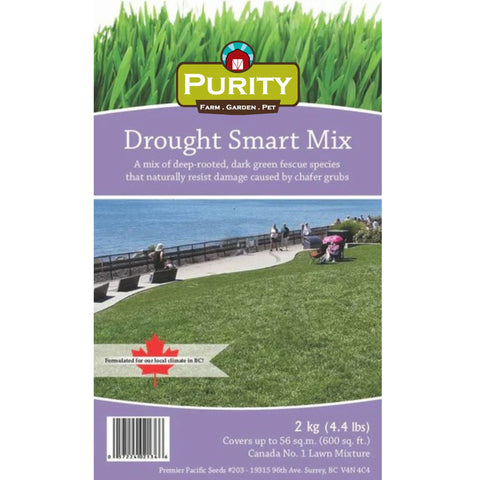
Looking for Grass Seed?
The right seed blend makes all the difference. Explore our lawn seed options — built for BC's climate and perfect for overseeding thin or bare patches in fall.
Browse Lawn SeedFrequently Asked Questions
How often should I fertilize my BC lawn?
Three to four times per year is the sweet spot for most cool-season lawns in the Interior — spring, optionally mid-summer (light application only), and fall. More frequent applications usually cause more problems than they solve.
When is the best time to fertilize a lawn in spring in Canada?
In the Kamloops and Merritt area, late April to early May is the right window for most years. Wait until your soil temperature is consistently at 10°C and your grass has started actively growing — you'll typically have mowed once or twice by this point.
Can I fertilize and seed at the same time?
Yes, but use a starter fertilizer (higher phosphorus) rather than a nitrogen-heavy lawn fertilizer when seeding. High nitrogen at germination can stress new seedlings. In fall, fertilize first, then overseed once the granules have been watered in.
What's the best fertilizer for a BC Interior lawn?
A balanced fertilizer like a 25-5-15 blend works well for spring applications in this region — enough nitrogen to drive green growth, with potassium to support stress tolerance through summer. For fall, look for a product higher in potassium (the third number) and lower in nitrogen.
Does fertilizer expire?
Granular fertilizers have a long shelf life if stored properly in a cool, dry place. They don't go "bad" but can clump or lose effectiveness if they've been exposed to moisture. Liquid fertilizers have a shorter shelf life and should be used within the season.
Is lawn fertilizer safe for pets?
Most fertilizers are safe for pets once they've been watered in and the lawn has dried. Keep animals off treated areas until after the first watering. If you have concerns, look for organic or pet-labelled fertilizer options — our team can help you find the right one.
Ready to Get Started?
The best thing you can do for your lawn this season is fertilize at the right time, with the right product — and not overthink it beyond that.
If you're not sure which fertilizer suits your soil or grass type, stop by and talk to our team in Kamloops or Merritt. We've seen every kind of BC Interior lawn, and we're happy to point you in the right direction.

Shop Lawn Fertilizer at Purity Feed
In store in Kamloops and Merritt, or order online for delivery across BC. Fertilizers, spreaders, lawn seed, and weed control — all in one place.
Shop Now